


Chiropractic care is often discussed in connection with spinal alignment, mobility, posture, and musculoskeletal health.
For people in DeSoto experiencing back discomfort, neck stiffness, limited mobility, or post-accident symptoms, understanding what chiropractic care involves can make it easier to explore appropriate options.
If you are researching spinal alignment in DeSoto, it helps to understand the evaluation process, the role of movement and rehabilitation, and when a professional medical assessment should come first.
What Does Spinal Alignment Mean?
The spine consists of a series of vertebrae that work together with muscles, ligaments, joints, nerves, and other structures.
When people use the phrase “spinal alignment,” they may be referring to the spine’s position and movement and how it relates to surrounding structures.
Chiropractic care can involve evaluation of the musculoskeletal system and movement patterns.
The National Center for Complementary and Integrative Health explains that chiropractic care may include a patient history, physical examination, treatment, and monitoring of progress. NCCIH Chiropractic Overview
An evaluation is important because discomfort or restricted movement can have different causes.
Why Spinal Mobility Matters
The spine needs to move while also providing stability.
Everyday activities require coordinated spinal movement.
These include:
- Walking
- Sitting
- Bending
- Reaching
- Turning
- Lifting
- Exercising
When discomfort or stiffness affects movement, normal activities may become more difficult.
A healthcare provider can assess whether movement limitations are present and determine whether further care is appropriate.
Common Reasons People Seek Chiropractic Care
People may explore chiropractic services for a variety of musculoskeletal concerns.
These can include:
Back Discomfort
Back symptoms may affect sitting, standing, walking, bending, and lifting.
Neck Stiffness
Neck stiffness can make turning the head or maintaining certain positions uncomfortable.
Reduced Mobility
Joint or muscle-related symptoms can make normal movement more difficult.
Accident-Related Symptoms
People may seek evaluation after a collision when they develop neck, back, or other musculoskeletal symptoms.
Postural Concerns
Some people seek guidance when they notice changes in how they sit, stand, or move.
The appropriate care depends on the individual’s condition.
Spinal Alignment After A Car Accident
A collision can expose the body to sudden forces.
Depending on the circumstances, a person may experience:
- Neck stiffness
- Back discomfort
- Muscle soreness
- Reduced range of motion
- Shoulder discomfort
However, symptoms do not necessarily indicate a specific spinal problem.
A professional evaluation is more useful than assuming that an accident automatically caused a particular alignment issue.
What Happens During A Chiropractic Evaluation?
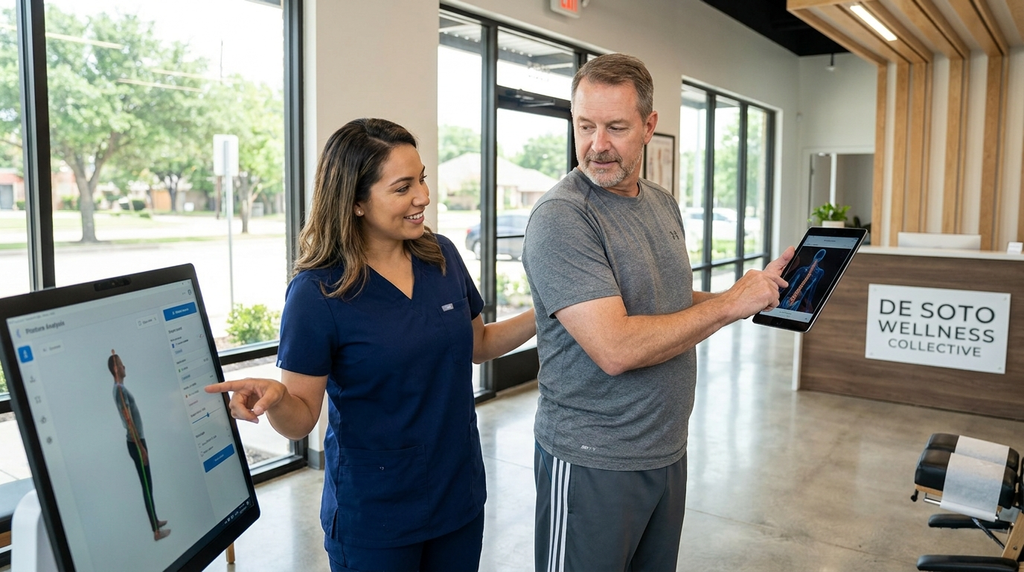
A first appointment may begin with a discussion of your health history and current concerns.
Your provider may ask about:
- Current symptoms
- Previous injuries
- Recent accidents
- When symptoms began
- Activities that aggravate symptoms
- Changes in mobility
- Daily functional limitations
A physical assessment may consider:
- Range of motion
- Strength
- Movement
- Muscle tenderness
- Posture
- Sensation
The information gathered can help determine whether chiropractic care is appropriate and whether additional evaluation may be necessary.
Chiropractic Techniques And Treatment Approaches
Chiropractic care can involve different approaches.
NCCIH describes spinal manipulation as a controlled thrust applied to a spinal joint and spinal mobilization as movement within a joint’s natural range without a thrust. NCCIH Spinal Manipulation Information
Depending on the individual’s needs, care may also involve:
- Mobility exercises
- Therapeutic exercises
- Movement education
- Activity guidance
- Rehabilitation strategies
The specific approach should be based on an individual’s condition and evaluation.
Is Chiropractic Care Appropriate For Everyone?
No.
Chiropractic treatment is not appropriate for every condition.
Some symptoms may require medical evaluation or referral before considering chiropractic treatment.
This is particularly important when symptoms suggest:
- Significant neurological involvement
- Serious trauma
- Fracture
- Severe or worsening symptoms
- Another underlying medical condition
A thorough evaluation can help determine the appropriate next step.
How Rehabilitation Can Support Recovery
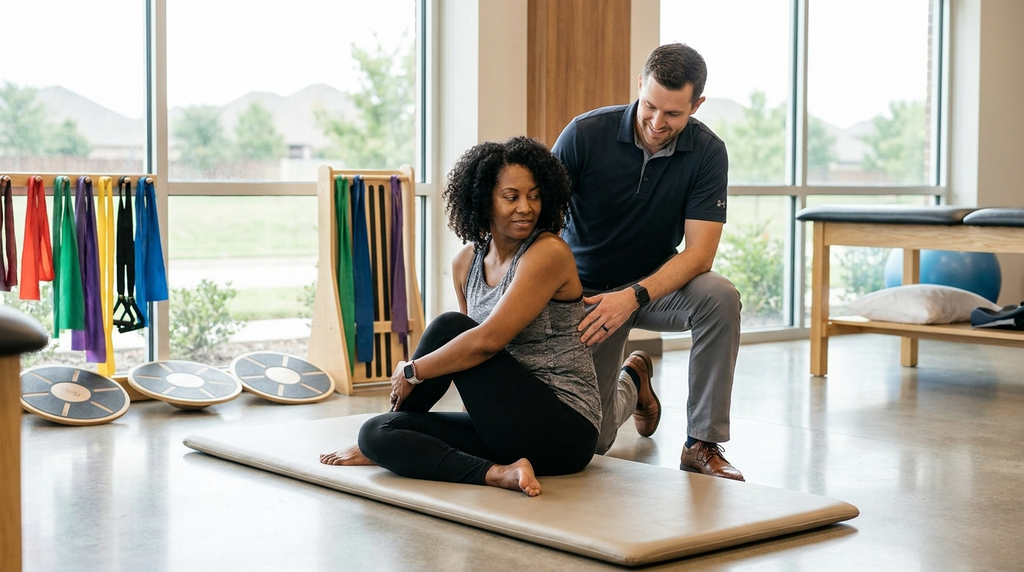
Recovery may involve more than hands-on treatment.
Rehabilitation can focus on restoring:
- Mobility
- Strength
- Flexibility
- Coordination
- Activity tolerance
For someone recovering from an accident, functional goals may include returning to:
- Driving
- Work
- Exercise
- Household activities
- Normal daily movement
A gradual return to activity should be based on the individual’s condition.
Spinal Alignment And Everyday Movement
The spine works with the hips, shoulders, muscles, and nervous system during everyday movement.
For example:
Bending
The spine and hips work together when you bend to pick something up.
Turning
Turning your body involves coordinated movement through the spine and surrounding joints.
Sitting
Prolonged sitting can become uncomfortable when back or neck symptoms are present.
Walking
Walking requires coordinated movement throughout the trunk and lower body.
Understanding these movement patterns can help connect treatment goals to real-life activities.
What To Expect From A Recovery Plan
A personalized recovery plan may include several components.
Evaluation
Understanding the patient’s symptoms and functional limitations.
Treatment
Using appropriate approaches based on the evaluation.
Rehabilitation
Working on movement, strength, flexibility, and function when appropriate.
Monitoring
Assessing how symptoms and function change over time.
Adjustment
Changing the plan when the patient’s condition or goals change.
Recovery should not be assumed to follow an identical timeline for everyone.
When To Seek Emergency Care
Some symptoms require immediate medical attention rather than routine chiropractic care.
Seek emergency evaluation for serious symptoms such as:
- Loss of consciousness
- Seizures
- Repeated vomiting
- Severe worsening headache
- Increasing confusion
- Difficulty waking
- Weakness or significant numbness
The CDC identifies these among warning signs following possible traumatic brain injury. CDC Traumatic Brain Injury Symptoms
After significant trauma, severe neck or back symptoms accompanied by neurological changes should also receive urgent medical attention.
How To Choose A Chiropractor In DeSoto
If you are researching spinal alignment care in DeSoto, consider several factors.
Evaluation Process
Does the provider assess your condition before recommending treatment?
Relevant Experience
Does the clinic work with the type of musculoskeletal concern you are experiencing?
Individualized Care
Is your treatment approach based on your symptoms and goals?
Rehabilitation
Does the clinic address movement and functional recovery when appropriate?
Communication
Does the provider explain findings and recommendations clearly?
Referral Awareness
Does the provider recognize when another type of medical evaluation may be needed?
Questions To Ask Before Starting Care
Before beginning treatment, consider asking:
What could be contributing to my symptoms?
What will the initial evaluation include?
What treatment options may be appropriate?
Will rehabilitation be part of my recovery?
How will my progress be measured?
When should I seek additional medical evaluation?
These questions can help you better understand your care options.
Local DeSoto Chiropractic Resource
If you are researching spinal alignment and chiropractic care in DeSoto, Premier Injury Clinics of DFW provides information about local injury chiropractic and rehabilitation services.
Explore the clinic’s DeSoto resource to learn more about available care options.
Frequently Asked Questions
Spinal alignment generally refers to the positioning and relationship of the vertebrae and surrounding structures. A healthcare evaluation can help determine whether a person’s symptoms involve a movement or musculoskeletal concern.
Chiropractic care may be considered for certain musculoskeletal conditions. The right approach depends on your symptoms and evaluation.
A provider may review your health and accident history, discuss symptoms, and assess movement, range of motion, strength, and other relevant factors.
It may be considered for certain accident-related musculoskeletal concerns. An appropriate evaluation should determine whether it suits the individual.
No. Back and neck symptoms can have many possible causes. A professional evaluation is necessary to understand the potential source of symptoms.
No. Treatment approaches should be adapted to the individual’s condition, symptoms, and goals.
When appropriate, rehabilitation may focus on mobility, strength, flexibility, movement, and returning to normal activities.
Seek urgent medical attention for serious symptoms such as loss of consciousness, seizures, repeated vomiting, severe worsening headache, confusion, difficulty waking, weakness, or significant numbness.
Final Takeaway
Understanding spinal alignment in DeSoto starts with recognizing that spinal health involves more than one structure or movement pattern.
An appropriate evaluation can help identify mobility limitations, musculoskeletal concerns, and functional problems while determining whether chiropractic or rehabilitation care may be suitable.
If you are exploring DeSoto chiropractic care, consider providers that emphasize evaluation, individualized care, communication, rehabilitation, and appropriate referral when necessary.
The right recovery approach depends on the underlying condition and the individual’s specific needs.
