

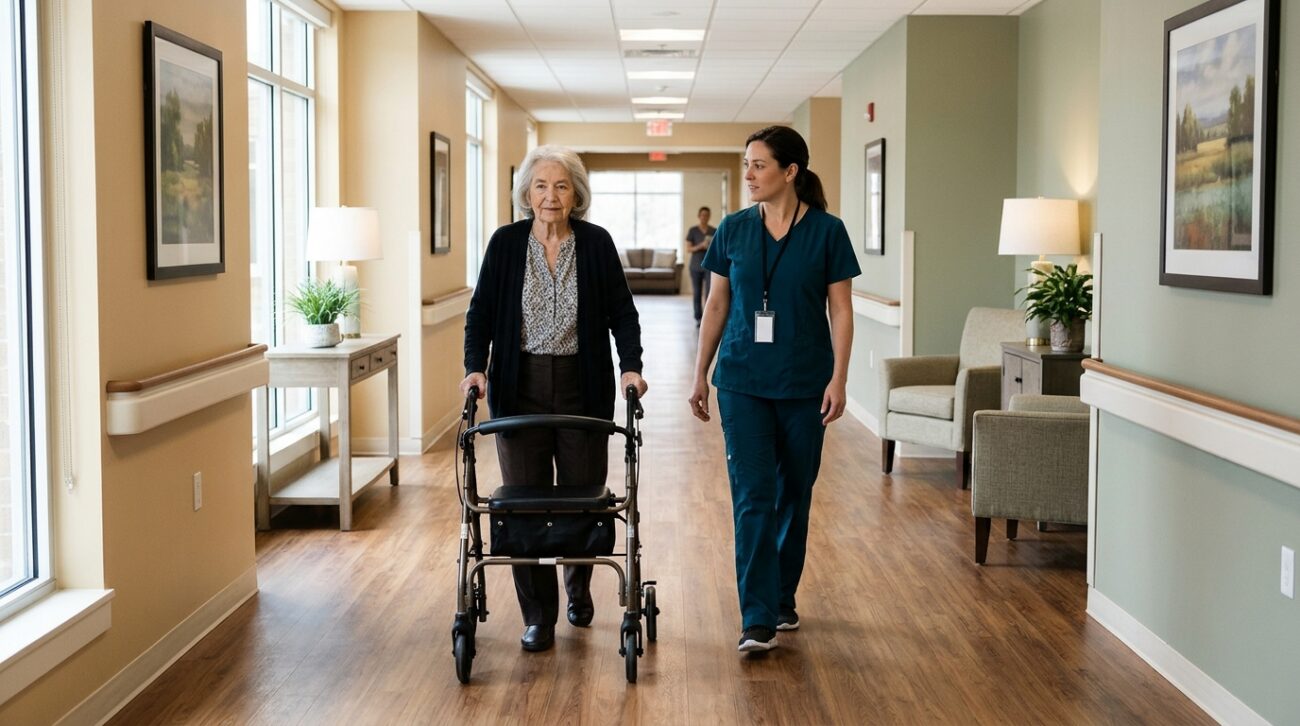
Nursing home wandering and elopement incidents can expose vulnerable residents to serious injuries when facilities fail to provide appropriate supervision, maintain individualized safety plans, or respond to known risks. Residents with dementia, cognitive impairment, disorientation, or mobility limitations may be particularly vulnerable to falls, environmental exposure, traffic hazards, and other dangers when they leave supervised areas.
In New York, nursing homes must comply with state and federal requirements concerning resident assessments, accident prevention, and appropriate supervision. When a facility fails to meet an applicable legal obligation and that failure causes injury, the resident or an authorized representative may have grounds for a legal claim.
However, wandering behavior or an elopement incident does not automatically establish negligence. Liability depends on the resident’s condition, foreseeable risks, the care provided, and evidence connecting the facility’s conduct to the resulting harm.
Quick Answer
Can a nursing home be sued if a resident wanders away or leaves the facility without appropriate supervision in New York?
Yes. A nursing home may face liability when inadequate supervision, failure to follow an individualized care plan, or another legally actionable failure allows a vulnerable resident to encounter a foreseeable danger that causes injury.
New York regulation 10 NYCRR § 415.12(h) and federal regulation 42 CFR § 483.25(d) require covered nursing homes to maintain environments as free of accident hazards as possible and provide adequate supervision and assistance devices.
A separate claim may also arise under New York Public Health Law § 2801-d when deprivation of a protected resident right causes injury.
However, every claim requires proof of the applicable legal requirements and resulting harm.
Key Takeaways
- Wandering and Elopement Differ: Wandering generally involves movement that may be repetitive or disoriented, while elopement involves leaving a supervised or safe area without necessary authorization or supervision.
- Individualized Assessments: Nursing homes must assess residents’ care needs and develop appropriate plans addressing identified safety risks.
- Adequate Supervision: State and federal regulations require nursing homes to provide supervision and assistance devices appropriate to residents’ assessed needs.
- Common Safety Failures: Missed resident checks, inadequate communication, defective exit-alert systems, and failure to update care plans may contribute to harmful incidents.
- Resident Rights: Safety interventions must also respect residents’ independence, dignity, and protection against improper restraints.
- Potential Legal Claims: Ordinary negligence, medical malpractice, and Public Health Law § 2801-d may provide different legal remedies.
- Important Evidence: Risk assessments, care plans, nursing notes, alarm records, surveillance footage, and search documentation can help establish liability.
- Filing Deadlines: Ordinary negligence, medical malpractice, statutory resident-rights claims, and wrongful death actions may involve different deadlines.
What Is the Difference Between Nursing Home Wandering and Elopement?
Wandering and elopement are related but distinct concepts in long-term care.
Understanding the difference is important because the resident’s behavior, ability to make decisions, and need for supervision may affect the facility’s responsibilities.
What Is Wandering?
Wandering generally refers to movement that may appear repetitive, aimless, disoriented, or connected to an unmet need.
A nursing home resident may walk through hallways, enter unfamiliar rooms, or repeatedly attempt to locate a familiar place.
Wandering may occur among people with dementia or other conditions affecting memory and orientation.
However, walking around a nursing home is not automatically dangerous or inappropriate.
Some residents can move independently and benefit from safe walking opportunities.
The relevant safety question is whether a resident’s movement creates foreseeable risks that require individualized support or supervision.
What Is Elopement?
In long-term care, elopement generally describes a resident leaving a facility or another designated safe area without appropriate authorization or supervision.
Examples may include:
- A resident leaving through an exterior door without necessary staff supervision
- A cognitively impaired resident exiting a secured nursing unit
- A resident entering an unsafe outdoor area unnoticed
- A resident leaving the building and becoming lost
- A resident with impaired judgment walking into nearby traffic
- A resident departing through an improperly monitored service entrance
- A resident leaving a supervised area despite an identified elopement risk
An elopement can occur even when the resident does not consciously intend to escape.
A person experiencing cognitive impairment may simply believe they are going home or looking for someone familiar.
Can Wandering Lead to Elopement?
Yes.
A resident who repeatedly approaches exit doors or expresses a desire to leave may eventually move beyond a safe area.
Previous wandering behavior may become relevant to assessing elopement risk.
However, a resident’s history must be evaluated individually.
Not every resident who walks through a nursing home requires an electronic monitoring device, locked environment, or continuous observation.
Why Does the Distinction Matter Legally?
An incident involving wandering within the facility may raise questions about fall prevention and supervision.
An incident involving elopement may also involve exit monitoring, missing-person procedures, environmental exposure, and emergency response.
Different facts may require different evidence and safety measures.
Why Are Some Nursing Home Residents at Greater Risk of Wandering?
Certain medical and cognitive conditions may increase the likelihood that a resident will become disoriented or leave an area without recognizing the danger.
A resident’s diagnosis alone does not determine the level of supervision required.
The facility must consider the resident’s actual behavior, abilities, medical needs, and care preferences.
Dementia and Alzheimer’s Disease
Dementia may affect memory, judgment, orientation, and the ability to recognize familiar surroundings.
A resident may become confused about where they are or attempt to return to a previous home.
These behaviors may increase the risk of becoming lost.
Cognitive Impairment
Residents with cognitive impairment may have difficulty understanding directions or recognizing unsafe environments.
Some may move independently but be unable to navigate back to their rooms or request help.
Delirium and Sudden Confusion
Delirium can cause sudden changes in attention, awareness, and behavior.
It may occur with illness, medication changes, dehydration, or other medical conditions.
A new episode of confusion may require prompt medical assessment and reconsideration of supervision needs.
Previous Wandering or Elopement Attempts
Earlier attempts to leave a unit or facility can provide important information about future risk.
Repeated exit-seeking behavior may indicate that existing care interventions are inadequate.
Staff may need to reassess the resident and revise the care plan.
Mobility and Balance Problems
A resident who can walk independently may still face significant fall risks.
Poor balance, impaired vision, weakness, and other conditions may increase the potential harm associated with unsupervised wandering.
Medication-Related Factors
Some medications may affect alertness, coordination, or behavior.
Medication changes and relevant side effects may be important when assessing a resident’s mobility and safety needs.
What Causes Nursing Home Elopement Accidents?
Elopement incidents may result from several failures occurring together.
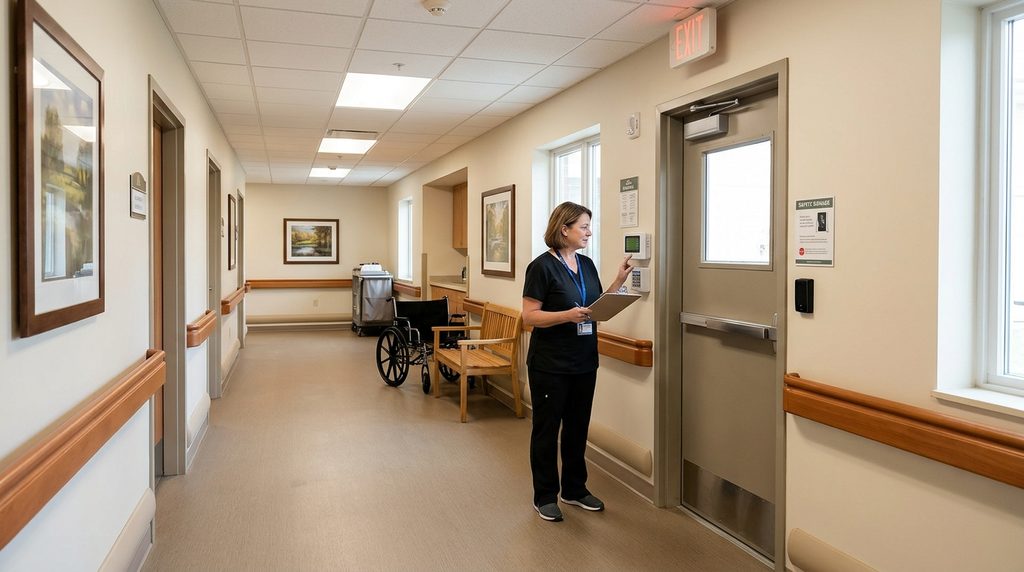
The investigation must identify which conditions existed and whether the nursing home had an applicable duty to address them.
Inadequate Resident Supervision
A resident may leave a supervised area when required monitoring is not performed.
Potential problems include:
- Missed scheduled resident checks
- Unclear staff monitoring responsibilities
- Failure to follow an individualized supervision plan
- Inadequate communication between shifts
- Failure to recognize repeated exit-seeking behavior
- Unreasonable delays in responding to a missing resident
- Failure to account for residents during required rounds
- Staff not knowing that a resident has been identified as an elopement risk
The level of supervision required depends on the resident’s assessed needs.
A nursing home is not automatically obligated to provide one-to-one observation for every resident who wanders.
Failure to Identify Elopement Risk
A facility may fail to recognize important changes in a resident’s behavior.
For example, a resident who previously remained within their unit may begin approaching exterior doors or expressing repeated intentions to leave.
Such behavior may require reassessment.
A failure to conduct an appropriate assessment can become legally relevant if it contributes to injury.
Failure to Update Care Plans
A resident’s needs can change over time.
An earlier assessment may no longer reflect current confusion, mobility limitations, or exit-seeking behavior.
When an individualized plan is not updated after a significant change, the resident may not receive appropriate protection.
Problems With Exit-Alert Systems
Some nursing homes use electronic alerts to identify residents who approach or pass through designated exits.
Potential concerns include:
- Malfunctioning exit alarms
- Monitoring devices that are not working
- Unmonitored exit points
- Failure to test required systems
- Staff failing to respond to alarms
- Inadequate communication about device status
- Alert systems not covering relevant areas
However, electronic monitoring is only one possible intervention.
The legal issue is whether the facility provided adequate protection for the resident’s needs, not whether every available technology was installed.
Poor Staff Communication
A resident may be identified as an elopement risk, but that information may not reach employees working on another shift or in another area.
A staff member unfamiliar with the resident may mistakenly believe the person is an authorized visitor.
The facility’s communication and monitoring procedures may become important evidence.
Delayed Missing-Resident Response
A nursing home may not recognize that a resident is missing until substantial time has passed.
Potential concerns include missed room checks, inadequate search procedures, or delayed notification of appropriate authorities.
The timing of the response may become relevant when the delay increases the resident’s exposure to danger.
What Legal Duties Do New York Nursing Homes Have to Prevent Accidents?
New York nursing homes are subject to state and federal regulations addressing resident assessment, care planning, and accident prevention.
These regulations require appropriate care but do not make facilities insurers against every possible accident.
New York Regulation 10 NYCRR § 415.12(h)
New York’s nursing home quality-of-care regulation specifically addresses accident prevention.
Section 415.12(h) requires covered facilities to ensure that:
- The resident environment remains as free of accident hazards as possible.
- Each resident receives adequate supervision and assistive devices to prevent accidents.
These requirements may become important in wandering and elopement claims.
The New York nursing home quality-of-care regulation establishes these obligations.
New York Regulation 10 NYCRR § 415.11
Section 415.11 addresses resident assessments and care planning.
Covered nursing homes must conduct comprehensive assessments and maintain individualized care plans.
Relevant assessments include cognitive status, functional ability, medical conditions, and psychosocial needs.
A care plan must reflect the resident’s assessed needs and be revised when appropriate.
The New York resident assessment and care-planning regulation explains these requirements.
Federal Regulation 42 CFR § 483.25(d)
Federal nursing home requirements also address accident prevention.
Under 42 CFR § 483.25(d), covered facilities must maintain environments as free of accident hazards as possible and provide adequate supervision and assistance devices.
The regulation may apply when a resident faces a known or foreseeable risk of leaving a supervised area and suffering harm.
Federal Regulation 42 CFR § 483.21
Federal regulation § 483.21 addresses comprehensive person-centered care planning.
It requires covered facilities to develop and implement appropriate baseline and comprehensive care plans.
These plans must address the resident’s medical, nursing, mental, and psychosocial needs.
Does a Regulatory Violation Automatically Establish Negligence?
Not necessarily.
A regulatory violation may support a particular legal claim, but the required elements must still be established.
For example, a claim under Public Health Law § 2801-d requires proof that the facility deprived a resident of a qualifying protected right or benefit and that the deprivation caused injury.
An ordinary negligence claim requires the applicable duty, breach, causation, and damages.
What Safety Measures May Be Appropriate for Residents at Risk of Elopement?
Appropriate precautions depend on the resident’s condition, behavior, mobility, and individual care plan.
There is no single safety measure that must be used for every wandering resident.
Individualized Risk Assessments
Risk assessments may consider:
- Cognitive impairment
- Previous wandering or elopement
- Statements about leaving the facility
- Disorientation
- Mobility
- Fall history
- Relevant medical conditions
- Changes in behavior
- Ability to recognize environmental danger
- Need for assistance with daily activities
The resulting information should inform appropriate care planning.
Scheduled Resident Checks
Some residents may require periodic visual checks or closer supervision.
The appropriate frequency depends on assessed needs.
When a care plan specifies particular checks, records may help establish whether those interventions were performed.
Safe Walking Areas
Facilities may provide supervised or otherwise appropriate spaces where residents can walk safely.
A resident’s need for movement should be considered alongside accident prevention.
Exit Monitoring
Certain residents may benefit from appropriately selected exit-alert systems or other assistive devices.
The facility must evaluate whether the chosen intervention reasonably addresses the identified risk.
Staff Communication
Relevant staff should understand the resident’s care needs and assigned supervision responsibilities.
Communication between nursing personnel, aides, and appropriate other employees can be important.
Reassessment After Behavioral Changes
A resident who begins repeatedly approaching exits or becomes newly disoriented may need further assessment.
Care plans should reflect significant changes in condition.
Appropriate Emergency Procedures
Facilities should have suitable procedures for responding when a vulnerable resident is missing.
The response may involve an immediate search, internal notification, and contacting emergency services or law enforcement when warranted.
The appropriate steps depend on the resident’s circumstances and the applicable procedures.
Must Nursing Homes Balance Safety With Resident Independence?
Yes.
Residents have legally protected rights to dignity, independence, choice, and appropriate treatment.
A facility cannot automatically restrict movement or impose restraints simply because supervision would be easier.
What Rights Apply to Nursing Home Residents?
Federal regulation 42 CFR § 483.10 recognizes important resident rights, including dignity, participation in care, and freedom from improper restraints.
The regulation also addresses safe living environments and respect for resident preferences.
Can a Nursing Home Lock Every Resident Into a Unit?
Not automatically.
Appropriate access controls and secured care settings depend on the facility and resident circumstances.
Safety precautions must be consistent with applicable fire safety requirements, resident rights, medical needs, and other legal obligations.
A resident who is capable of making informed decisions may have different rights and care needs from someone who lacks decision-making capacity.
Are Physical or Chemical Restraints Allowed to Prevent Wandering?
Federal rules generally prohibit restraints imposed for discipline or staff convenience and not required to treat a resident’s medical symptoms.
When restraints are clinically justified and legally permitted, additional requirements apply.
Facilities should not treat medication or physical restriction as an automatic substitute for individualized supervision.
Does Resident Independence Eliminate the Duty of Care?
No.
Respecting independence and providing appropriate safety measures are not mutually exclusive.
The facility must balance resident preferences and lawful choices with its obligation to address foreseeable hazards.
The correct balance depends on the particular resident’s condition and rights.
What Do Court and Regulatory Decisions Say About Wandering and Elopement?
New York court decisions and federal nursing home enforcement proceedings provide useful examples of how supervision, assessments, care plans, and causation are evaluated.
These proceedings do not all involve the same legal remedies.
A civil negligence lawsuit concerns damages, while an administrative enforcement case concerns regulatory compliance.
Palmer v. Frances Schervier Home and Hospital (2022)
In Palmer v. Frances Schervier Home and Hospital, decided January 11, 2022, the Supreme Court, Bronx County considered claims involving a nursing home resident with dementia, impaired mobility, and a history of falls.
The resident had been sitting near a nurses’ station before moving to another unit without observation.
She was subsequently found on the floor near fire exit doors and sustained serious injuries.
The plaintiff alleged that the nursing home failed to provide adequate supervision, appropriate assistive devices, and an updated care plan addressing the resident’s declining condition.
The defendants argued that their care met applicable standards and that the resident’s medical condition caused the fall.
The court found factual disputes concerning supervision, the resident’s care needs, and the cause of the injury.
It denied dismissal of the negligence and resident-rights claims but dismissed the demand for punitive damages.
The case involved wandering within the facility rather than a resident leaving the building.
It demonstrates why a resident’s documented behavior and changing supervision needs may become important in nursing home injury litigation.
The official decision in Palmer provides the court’s reasoning.
Central Park Rehabilitation and Nursing Center (2018)
In a federal administrative decision dated February 21, 2018, the Department of Health and Human Services reviewed an elopement incident involving Central Park Rehabilitation and Nursing Center in Syracuse, New York.
The resident experienced confusion and wandering behavior.
Facility staff eventually identified her as an elopement risk and planned monitoring interventions.
However, the facility did not adequately communicate the risk to relevant personnel or ensure effective supervision.
The resident left her unit, traveled to another floor, and exited the facility.
Staff did not realize she had departed.
Police subsequently found the resident wandering in downtown Syracuse and returned her to the nursing home.
The resident was not physically injured during that elopement.
Nevertheless, the administrative law judge determined that the facility failed to comply substantially with applicable federal nursing home accident-prevention requirements.
The decision upheld the relevant regulatory enforcement action and monetary penalties.
This was an administrative compliance proceeding, not a civil damages award to the resident.
The official HHS decision involving Central Park Rehabilitation and Nursing Center explains the findings.
What Do These Decisions Demonstrate?
These decisions illustrate several important principles:
- Known Risk Matters: Staff awareness of confusion, wandering, or prior incidents may be relevant to foreseeability.
- Care Planning Matters: Residents’ changing needs may require updated assessments and interventions.
- Implementation Matters: Written precautions may be inadequate when they are not actually followed.
- Communication Matters: Staff members responsible for supervision need appropriate information about resident risks.
- Harm and Regulatory Compliance Are Different: A facility may violate accident-prevention regulations even when a resident escapes injury.
- Causation Matters in Civil Claims: Recovering damages requires satisfying the applicable legal requirements concerning injury and causation.
- Case Outcomes Must Be Distinguished: A regulatory penalty or denial of summary judgment is not the same as a final civil liability judgment.
What Is New York Public Health Law § 2801-d?
Public Health Law § 2801-d provides a private cause of action when a residential health care facility deprives a patient of a legally protected right or benefit and that deprivation causes injury.
The statute may become relevant when a nursing home fails to provide care or supervision required under applicable law.
What Is a Protected Right or Benefit?
Section 2801-d addresses qualifying rights or benefits established through:
- State statutes
- Federal statutes
- State regulations
- Federal regulations
- Applicable codes and rules
- Qualifying contractual provisions
A claim must identify the relevant right or benefit.
How Could Elopement Involve a Resident-Rights Claim?
A resident may have a protected right to receive adequate supervision and appropriate assistance devices.
For example, a facility may fail to implement a required individualized monitoring plan for someone at known risk of leaving a safe area.
If that deprivation causes injury, Section 2801-d may provide a basis for recovery.
However, the claimant must establish the statutory requirements rather than merely showing that an elopement occurred.
Does the Facility Have a Defense?
Yes.
Section 2801-d recognizes an affirmative defense when the facility proves that it exercised all care reasonably necessary to prevent and limit the deprivation and resulting injury.
The defense depends on the evidence.
What Damages Does Section 2801-d Address?
The statute recognizes injuries that may include physical harm, emotional harm, death, and financial loss.
It also contains specific compensatory damages provisions.
Punitive damages may be available in qualifying circumstances involving willful deprivation or reckless disregard of lawful resident rights.
They are not automatic.
The New York Public Health Law § 2801-d provides the governing provisions.
How Is Ordinary Negligence Different From Medical Malpractice?
Nursing home cases may involve both ordinary care failures and professional medical decisions.
The distinction can affect the evidence, legal requirements, and filing deadline.
Ordinary Negligence
Ordinary negligence generally involves a breach of a duty of reasonable care.
For example, a claim may concern a failure to perform specifically assigned supervision checks or an unreasonable failure to respond to an exit alarm.
Whether a particular claim sounds in ordinary negligence depends on the conduct at issue.
Medical Malpractice
Medical malpractice generally involves professional assessment, diagnosis, treatment, or clinical judgment.
For example, a claim may concern an allegedly improper clinical evaluation of a resident’s cognitive status or medical need for supervision.
A medical malpractice claim generally requires proof of a departure from accepted professional standards that caused injury.
Can Both Types of Claims Arise From One Incident?
Potentially, yes.
A resident’s elopement may involve negligent failure to carry out an established plan and an alleged error in the clinical assessment underlying that plan.
However, the claims must be legally distinct and supported by evidence.
The label used in a complaint does not independently determine whether a claim is negligence or medical malpractice.
How Is Nursing Home Elopement Negligence Proven?
A claimant must establish the elements required by the relevant legal theory.
In an ordinary negligence claim, these generally include a duty, breach, causation, and damages.
| Legal Element | What Must Be Established |
| Duty of Care | The facility owed an applicable legal obligation concerning the resident’s safety |
| Breach of Duty | The facility failed to provide legally required reasonable care or supervision |
| Causation | The failure caused or contributed to the incident and resulting injury |
| Damages | The resident suffered legally compensable harm |
Establishing the Resident’s Risk
The investigation may begin with admission assessments, cognitive evaluations, prior incidents, and documented behavior.
For example, earlier attempts to leave a unit may help establish that an elopement risk was known or reasonably foreseeable.
Establishing the Care Plan
The resident’s care plan may identify interventions such as supervised walking, periodic observation, or appropriate monitoring equipment.
The investigation must determine whether the plan met applicable requirements.
Establishing What Staff Actually Did
Records may show whether scheduled checks occurred, whether alarms activated, and how employees responded.
Witnesses may provide additional information.
Establishing the Connection to Injury
The claimant must connect the alleged failure to the resident’s resulting harm.
For example, if a resident with dementia leaves an unmonitored exit and suffers injuries outside, the investigation may examine whether appropriate supervision would have prevented the departure or reduced the resulting danger.
Can a Facility Be Negligent Without a Prior Elopement?
Potentially, yes.
A prior successful elopement is not always necessary to establish foreseeable risk.
Cognitive impairment, repeated exit-seeking behavior, confusion, or other documented circumstances may be relevant.
However, the foreseeability analysis must be based on the particular facts.
What Evidence Is Important in a Nursing Home Wandering or Elopement Claim?
These claims often depend on reconstructing the resident’s movements and the facility’s response.
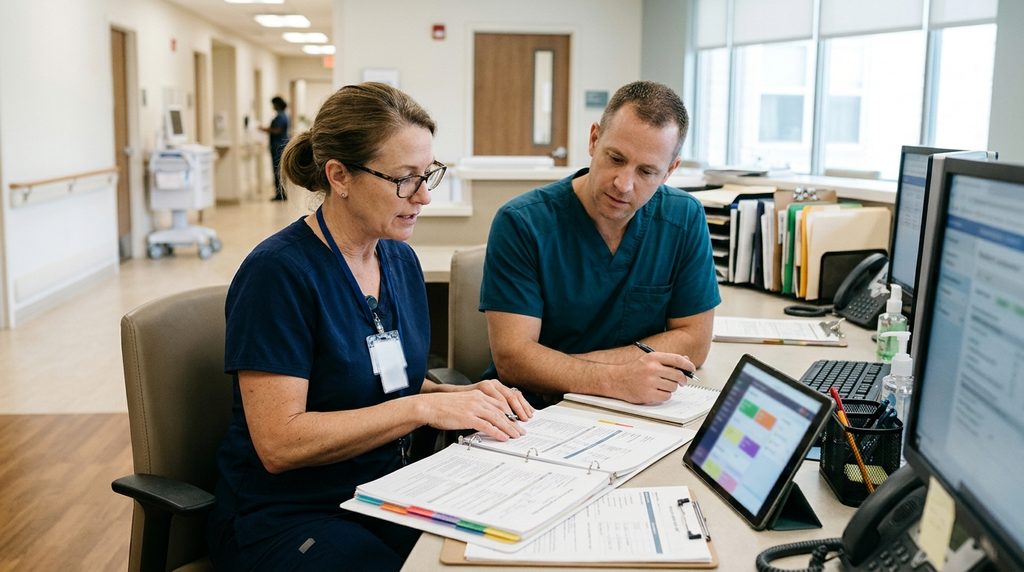
Records may also establish what the nursing home knew before the incident.
| Evidence | Why It Matters |
| Admission Assessment | Establishes the resident’s initial cognitive and functional condition |
| Elopement Risk Assessments | May identify known risks and changes over time |
| Comprehensive Care Plan | Documents required supervision and safety interventions |
| Nursing Progress Notes | Records behavior, wandering, and changes in condition |
| Resident Check Logs | May establish whether scheduled supervision occurred |
| Exit Alarm Records | May document alerts, faults, and system performance |
| Electronic Monitoring Records | May show whether assigned monitoring devices were used |
| Surveillance Footage | May establish when and how the resident left |
| Staff Assignment Records | Helps identify who was responsible for supervision |
| Shift Communication Records | May document whether risk information was communicated |
| Incident Reports | Records the discovery and initial response |
| Missing-Resident Search Records | May establish the timing and scope of the search |
| Police and Emergency Records | Documents outside assistance and recovery circumstances |
| Medical Documentation | Establishes injuries and treatment |
| Expert Evaluations | Helps address care standards and causation |
Admission and Cognitive Assessments
Assessments may identify memory impairment, confusion, mobility problems, and other relevant conditions.
They can help establish what the facility knew when the resident entered the nursing home.
Elopement Risk Assessments
Risk assessments may document exit-seeking behavior, previous wandering incidents, and the need for supervision.
Changes in assessed risk over time may be particularly important.
Nursing Notes and Resident Check Logs
Nursing documentation can reveal when the resident was last seen and whether staff performed required observations.
Discrepancies between planned and recorded checks may require further investigation.
Exit Alarm and Surveillance Records
Surveillance footage may establish the route used by the resident.
Alarm records may help determine whether an alert was generated and how staff responded.
The absence of an electronic record does not automatically prove that no supervision occurred, but it may raise questions when documentation was required.
Staff Assignments and Communications
Work schedules and shift reports may identify who was responsible for monitoring the resident.
They may also reveal whether relevant employees knew about the resident’s elopement risk.
Medical Records
Hospital records, diagnostic imaging, and treatment documentation may establish injuries sustained during or after the incident.
Understanding evidence for personal injury claims provides additional context about how evidence supports findings concerning conduct, causation, and damages.
What Injuries Can Result From Nursing Home Wandering or Elopement?
The consequences vary depending on the resident’s medical condition and the circumstances.
Falls and Fractures
Residents may fall while walking through unfamiliar areas, descending stairs, or navigating uneven surfaces.
Potential injuries include hip fractures, wrist fractures, and other orthopedic trauma.
Head Injuries
Falls or collisions may cause concussions, bleeding within the skull, or other traumatic brain injuries.
Older adults may experience significant complications.
Environmental Exposure
A resident who leaves the facility without appropriate clothing or assistance may encounter extreme cold, heat, or severe weather.
Depending on the circumstances, prolonged exposure may cause hypothermia, dehydration, or heat-related illness.
Traffic-Related Injuries
A disoriented resident may enter a roadway or parking area without recognizing vehicle hazards.
Emotional Distress
Wandering and becoming lost may cause significant fear, anxiety, or other emotional harm.
The availability of damages depends on the applicable claim and evidence.
Death
In severe cases, wandering or elopement may lead to fatal injuries.
A qualifying wrongful death action requires evidence connecting legally actionable conduct to the death.
What Should Families Do When a Nursing Home Resident Is Missing?
The priority is locating the resident and obtaining necessary medical assistance.
A missing vulnerable resident may face serious risks, particularly when the person has dementia or cannot recognize danger.
1. Request Immediate Action
Notify nursing home management and appropriate staff that the resident is missing.
If the person is at immediate risk or the facility is not taking necessary emergency steps, contact 911.
2. Provide Important Identifying Information
Provide the resident’s description, clothing, mobility limitations, and relevant medical concerns to appropriate responders.
3. Ask About the Last Confirmed Location
Determine when and where the resident was last observed.
This information may help focus the search.
4. Identify Possible Exit Routes
Relevant information may include doors, elevators, stairwells, courtyards, and nearby outdoor areas.
Searching should be performed safely and coordinated with appropriate personnel.
5. Preserve Incident Communications
Save messages and written communications concerning the missing resident.
6. Request an Incident Report
Ask the facility for available information about the incident and response.
7. Preserve Surveillance Information
Identify relevant security cameras and ask that applicable recordings be preserved.
8. Obtain Medical Evaluation After Recovery
A recovered resident may require assessment for injuries, dehydration, environmental exposure, or other medical concerns.
9. Review the Resident’s Safety Plan
Once immediate needs are addressed, the facility should reassess applicable risks and interventions.
The resident’s rights and preferences remain important.
10. Evaluate Reporting and Legal Options
A family or authorized representative may consider a regulatory complaint or legal review when the circumstances indicate a potential failure of required care.
Can Families Report Elopement Concerns to New York Authorities?
Yes.
The New York State Department of Health investigates nursing home complaints involving alleged violations of applicable state and federal requirements.
How Can a Complaint Be Filed?
Anyone may submit a nursing home complaint through the official state process.
The Nursing Home Complaint and Discharge Appeal Hotline is available at 1-888-201-4563.
The New York State nursing home complaint form also provides an online reporting option.
What May the Department Investigate?
An investigation may involve:
- Resident care records
- Risk assessments
- Staff interviews
- Facility policies
- Supervision documentation
- Incident reports
- Relevant regulatory requirements
The Department may issue citations and require corrective action when violations are established.
Does Filing a Complaint Prove Negligence?
No.
A regulatory finding and a civil damages claim involve different legal questions.
A complaint may provide useful documentation, but a lawsuit must independently satisfy the applicable requirements.
Does a Complaint Preserve the Civil Filing Deadline?
Not necessarily.
Submitting a regulatory complaint does not automatically extend or preserve the statute of limitations for a separate civil action.
The applicable legal deadlines must be evaluated independently.
What Compensation May Be Available After Nursing Home Elopement Negligence?
Potential compensation depends on the injury, legal claim, evidence, and circumstances.
Medical Expenses
Recoverable damages may include emergency treatment, hospitalization, surgery, diagnostic testing, rehabilitation, and other qualifying medical care.
Pain and Suffering
Applicable negligence or malpractice claims may permit compensation for physical pain and other noneconomic harm.
Emotional Harm
Certain claims may provide recovery for qualifying emotional injuries.
Public Health Law § 2801-d expressly includes emotional harm within its definition of injury.
Long-Term Care Costs
Severe injuries may require additional nursing care, mobility assistance, therapy, or other services.
Future costs must be supported by appropriate evidence.
Statutory Resident-Rights Damages
Section 2801-d contains compensatory damages provisions and permits punitive damages in limited circumstances involving willful deprivation or reckless disregard.
The statute also allows discretionary attorney fee awards in qualifying cases.
Wrongful Death Damages
When legally actionable conduct causes death, a personal representative may have grounds for a wrongful death action.
New York’s wrongful death law generally concerns pecuniary losses recoverable by qualifying distributees.
Separate survival or resident-rights claims may involve additional legally available remedies.
Does Every Wandering or Elopement Incident Establish Nursing Home Negligence?
No.
Even well-run facilities may care for residents who are mobile, independent, or experiencing unpredictable cognitive changes.
The law generally requires appropriate prevention and supervision rather than guaranteeing that no resident will ever wander.
What If the Resident Was Previously Independent?
Prior independence may be relevant, but it does not automatically resolve the issue.
A resident’s cognition or health may change after admission.
New risks may require reassessment and different interventions.
What If the Resident Had No Prior Elopement History?
The absence of a previous elopement does not necessarily eliminate foreseeable risk.
Other behaviors may provide warning.
However, the evidence must establish what the facility reasonably should have recognized.
What If an Alarm Was Installed?
An installed alarm may support the facility’s safety efforts.
However, the investigation may examine whether it functioned, was appropriate, and was used as required.
Technology does not automatically replace necessary staff supervision.
What If the Resident Refused Supervision?
Resident choice and decision-making capacity are important.
A capable resident may exercise rights that require respect.
However, a refusal does not automatically eliminate all obligations to assess risk, explain alternatives, or provide legally required care.
The circumstances must be reviewed individually.
How Long Does Someone Have to File a Nursing Home Elopement Claim in New York?
The applicable filing period depends on whether the claim involves ordinary negligence, medical malpractice, deprivation of resident rights, or wrongful death.
| Claim Type | General New York Filing Period |
| Ordinary Personal Injury Negligence | Generally three years under CPLR § 214(5) |
| Medical Malpractice | Generally two years and six months under CPLR § 214-a |
| Public Health Law § 2801-d Claim | Generally three years under CPLR § 214(2) |
| Wrongful Death | Generally two years after death under EPTL § 5-4.1 |
| Certain Claims Against Public Entities | Special notice and filing requirements may apply |
What Is the Ordinary Negligence Deadline?
CPLR § 214(5) generally establishes a three-year limitations period for ordinary personal injury negligence actions.
A claim involving failure to perform routine supervision duties may potentially fall within this framework.
However, its classification depends on the actual alleged conduct.
What Is the Medical Malpractice Deadline?
CPLR § 214-a generally requires medical malpractice actions to be commenced within two years and six months, subject to applicable exceptions.
Claims involving professional clinical assessments or treatment decisions may raise malpractice issues.
The complaint’s terminology does not independently determine the governing deadline.
What Is the Public Health Law § 2801-d Deadline?
Section 2801-d claims generally fall within the three-year period applicable to certain statutory liabilities under CPLR § 214(2).
Accrual and other timing issues require evaluation under the applicable circumstances.
What Is the Wrongful Death Deadline?
Under EPTL § 5-4.1, wrongful death actions generally must be commenced within two years after death.
The personal representative ordinarily brings the action for the benefit of qualifying distributees.
Why Is Prompt Evidence Preservation Important?
Relevant surveillance recordings may be overwritten, staff schedules may become unavailable, and memories may fade.
Early preservation of assessments, care plans, alarm records, and incident documentation can be important even when a general lawsuit deadline is several years away.
What Mistakes Can Weaken a Nursing Home Wandering or Elopement Claim?
Several mistakes may complicate the investigation.
These include:
- Failing to obtain the resident’s complete care records
- Not reviewing cognitive and elopement risk assessments
- Overlooking prior wandering incidents
- Failing to preserve care plan revisions
- Not identifying when the resident was last observed
- Overlooking supervision and resident check logs
- Failing to investigate exit-alert records
- Allowing surveillance footage to be overwritten
- Not identifying the employees responsible for monitoring
- Assuming every instance of wandering is negligent
- Assuming every elopement results in a legally compensable injury
- Ignoring the resident’s independence and decision-making rights
- Assuming an electronic monitoring device guarantees safety
- Failing to distinguish regulatory deficiencies from civil damages
- Confusing negligence with medical malpractice
- Overlooking Public Health Law § 2801-d
- Delaying medical evaluation after an incident
- Missing the applicable lawsuit filing deadline
A well-supported claim requires evidence of the resident’s risks, the facility’s legal responsibilities, the care actually provided, and the resulting injury.
When May Legal Guidance Be Useful?
Legal guidance may be particularly important when a nursing home resident experiences a serious fall, significant environmental exposure, hospitalization, permanent injury, or death following wandering or elopement.
Additional investigation may be necessary when a facility denies receiving warnings, disputes whether the resident was an elopement risk, or claims that prescribed monitoring procedures were followed.
Complex cases may require review of nursing records, care plans, exit-alert systems, surveillance footage, staffing records, incident reports, and expert opinions concerning appropriate supervision.
A nursing home negligence lawyer Long Island may evaluate whether the evidence supports a claim under ordinary negligence, medical malpractice, or Public Health Law § 2801-d.
People researching local legal services may also review a Long Island injury law office when seeking information about nursing home wandering and elopement claims in Nassau or Suffolk County.
Every incident requires individual evaluation, and an unexpected departure from a nursing home does not automatically guarantee compensation.
Frequently Asked Questions About Nursing Home Wandering and Elopement
Can a family sue a nursing home if a resident wanders away?
Yes, in certain circumstances. A claim may be available when a facility fails to provide legally required supervision or follow an appropriate safety plan and that failure causes injury. However, wandering itself does not automatically establish negligence. The resident’s assessed risks, care requirements, staff response, and resulting harm must be evaluated.
Is a nursing home responsible if a resident with dementia leaves the facility?
Potentially, yes. A nursing home may face liability when it fails to reasonably address a known or foreseeable elopement risk. Relevant evidence may include cognitive assessments, previous exit-seeking behavior, supervision plans, alarm records, and staff actions. Dementia alone does not automatically establish that every departure was preventable.
Does a nursing home have to provide a wandering alarm for every resident with dementia?
No. Federal and New York regulations require adequate supervision and assistance devices based on residents’ needs, but they do not impose one universal monitoring device for every resident with dementia. The appropriate intervention depends on individual assessments, risks, available alternatives, and resident rights. An alarm may be useful but is not a substitute for all supervision.
Can a nursing home face consequences if a missing resident is found unharmed?
Yes. A nursing home may face regulatory enforcement when it fails to meet applicable accident-prevention and supervision requirements, even if the resident is not physically injured. However, a civil damages claim involves different requirements. Recovery generally depends on a legally actionable deprivation or breach that caused compensable harm.
How long does someone have to file a nursing home elopement lawsuit in New York?
The deadline depends on the claim. Ordinary negligence and Public Health Law § 2801-d actions generally have three-year periods, while medical malpractice generally has a two-year-and-six-month period. Wrongful death actions generally must be filed within two years after death. Special rules or exceptions may apply.
Conclusion
Nursing home wandering and elopement claims in New York require careful investigation because residents have different medical conditions, supervision needs, and legal rights. Wandering behavior alone does not establish negligence, and nursing homes are not automatically liable whenever a resident leaves a supervised area.
Potential claims may arise when facilities fail to assess known risks, update individualized care plans, provide adequate supervision, respond to monitoring alerts, or take appropriate action when a vulnerable resident is missing.
New York regulation 10 NYCRR § 415.12(h) and federal regulation 42 CFR § 483.25(d) establish important accident-prevention and supervision requirements. Public Health Law § 2801-d may provide a separate cause of action when deprivation of a protected resident right causes injury.
Court and regulatory decisions demonstrate why risk assessments, actual implementation of care plans, staff communication, and causation are important. The existence of written safety policies does not automatically establish that adequate precautions were taken.
Admission assessments, nursing notes, supervision logs, exit-alert records, surveillance footage, emergency reports, and medical documentation can help establish the circumstances.
Understanding New York’s resident protections, potential legal claims, available damages, and filing deadlines can help residents and families evaluate nursing home wandering and elopement incidents using reliable evidence.
