

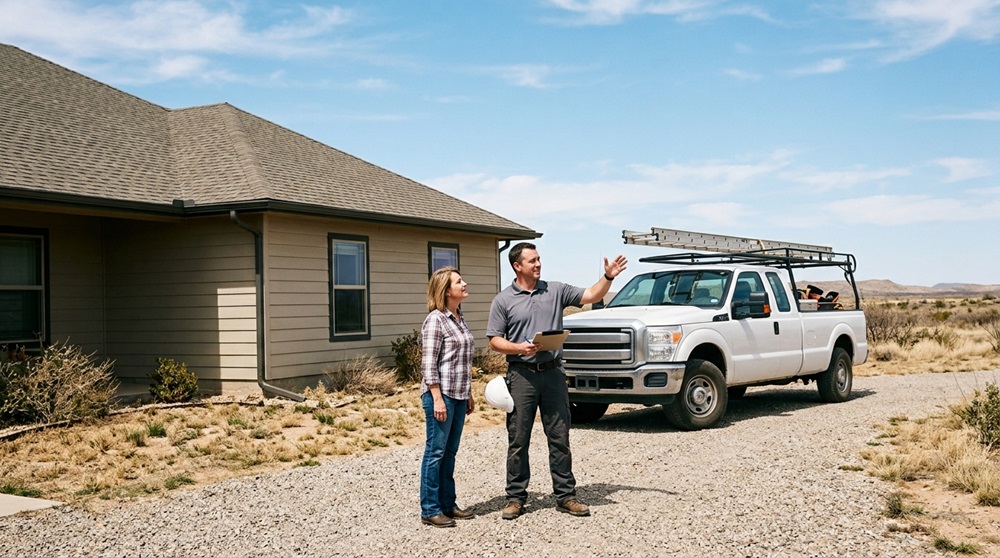
Choosing the right contractor matters when a property needs roofing, siding, gutters, windows, carports, storm repair, or metal building support. Property owners comparing roofing and exterior services West Texas should look for local experience, clear estimates, durable material knowledge, and a contractor who understands how West Texas weather affects the full exterior system.
Quick Answer
West Texas property owners should choose a roofing and exterior contractor based on local experience, service range, written estimates, insurance, communication, material knowledge, storm damage documentation, and experience with both residential and commercial projects. The right contractor should explain how the roof, siding, gutters, soffit, fascia, windows, carports, and metal building components work together.
A good contractor should not only fix one visible issue. They should inspect the surrounding exterior areas, explain what is damaged, recommend practical options, and help the property owner understand whether repair, replacement, or a larger exterior upgrade makes sense.
Key Takeaways
- Roofing and exterior services should be evaluated together because roofs, gutters, siding, fascia, soffit, and windows often affect one another.
- West Texas properties face hail, high wind, dust, heat, UV exposure, and sudden storms.
- A contractor should provide clear written estimates, not vague pricing or pressure-based recommendations.
- Storm damage may affect multiple exterior systems, not only the roof.
- Property owners should ask about roofing, siding, gutters, windows, carports, commercial roofing, metal buildings, and barndominiums when relevant.
- Local experience matters because West Texas homes, rural properties, metal buildings, and commercial structures have different exterior needs.
Why Contractor Choice Matters for Exterior Work in West Texas
A property’s exterior is a connected system. The roof sheds water. Gutters carry that water away. Siding protects walls. Soffit and fascia support roof-edge ventilation and appearance. Windows help with comfort, energy performance, and protection from weather. Carports and metal structures protect vehicles, equipment, and work areas.
When one part fails, another part may be affected. A roof leak can damage fascia. Poor drainage can affect siding or foundations. Hail can damage shingles, gutters, vents, siding, and window trim during the same storm. Wind can loosen roof edges, metal panels, fascia, and siding.
West Texas weather makes this even more important. The National Weather Service Lubbock forecast office monitors regional severe weather conditions, including storms that can bring hail, damaging winds, and heavy rain. Property owners need contractors who understand how those conditions affect both roofs and exterior components.
Start With Local West Texas Experience
Local experience should be one of the first things property owners review. A contractor who regularly works in West Texas is more likely to understand regional roofing materials, storm patterns, rural property needs, metal building details, and common exterior damage.
Local experience can help with:
- Identifying hail and wind damage
- Understanding roof and gutter problems common in the region
- Recommending siding materials for sun, dust, and wind exposure
- Inspecting soffit, fascia, and roof edges after storms
- Planning exterior work for homes, shops, and commercial buildings
- Coordinating roofing and metal building needs
- Providing follow-up service after repairs or replacement
A contractor without local experience may miss damage patterns that are common in the region or recommend materials that do not fit the climate.
Review the Full Service Range
Before hiring a contractor, property owners should confirm whether the company can handle the type of exterior work needed. Some companies only handle basic roof repairs. Others offer broader exterior services that may be more useful after storms or during property upgrades.
Common roofing and exterior services may include:
- Residential roofing
- Commercial roofing
- Roof repair
- Roof replacement
- Storm damage repair
- Metal roofing
- TPO roofing
- Metal siding
- Vinyl siding
- Seamless gutters
- Soffit and fascia
- Replacement windows
- Residential carports
- Commercial carports
- Metal buildings
- Barndominiums
A broader service range can be useful when damage affects more than one exterior area. For example, a hailstorm may damage shingles, gutters, vents, siding, fascia, and window trim. A contractor who understands multiple systems can inspect the property more completely.
Ask Whether the Contractor Understands Storm Damage
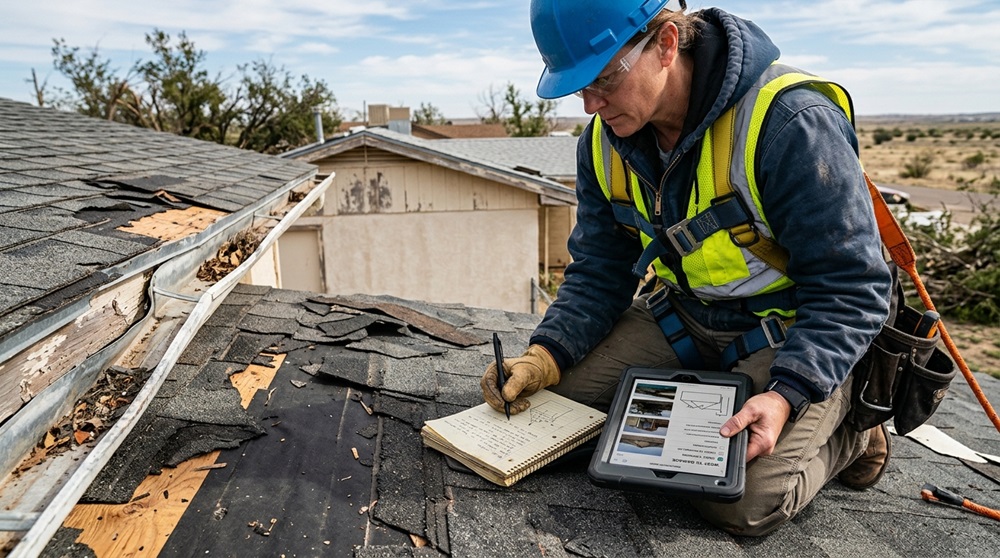
Storm damage is one of the main reasons property owners need roofing and exterior services in West Texas. Hail and wind may damage more than the roof surface. Gutters, siding, windows, fascia, vents, trim, and metal panels may also be affected.
The National Weather Service Lubbock storm documentation shows how regional severe weather can involve damaging wind, hail, and roof-related property impacts. After these events, a complete exterior review is often more useful than looking at shingles alone.
Storm damage may include:
- Missing shingles
- Bruised or cracked shingles
- Dented gutters
- Damaged roof vents
- Loose flashing
- Damaged siding
- Broken window trim
- Bent fascia
- Damaged soffit
- Dented metal panels
- Loose carport panels
- Leaks after wind-driven rain
A contractor should be able to inspect the roof and surrounding exterior components, document visible damage, and explain what needs repair.
Confirm Written Estimates and Scope Details
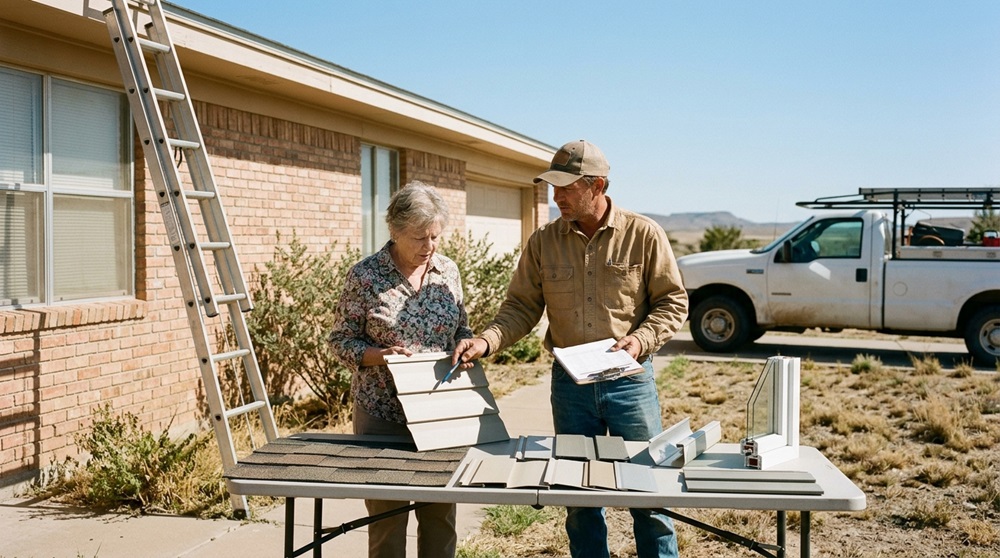
A written estimate should be clear enough for the property owner to understand the project. This is especially important when the work includes more than one service, such as roofing, gutters, siding, or window replacement.
A useful estimate may include:
- Property inspection summary
- Service areas included
- Repair or replacement recommendation
- Material options
- Labor scope
- Timeline
- Cleanup expectations
- Warranty details
- Notes about hidden damage
- Insurance-related documentation if storm damage is involved
- Payment terms
- Contact information for follow-up questions
If the estimate is vague, the property owner should ask for clarification before approving work. A contractor should be willing to explain what is included, what is not included, and why the recommendation was made.
Understand Insurance and Documentation After Storms
When hail, wind, or heavy rain causes damage, documentation becomes important. Property owners should take photos, keep receipts, save inspection notes, and avoid making permanent repairs too quickly if an insurance claim may be involved.
The Texas Department of Insurance roof replacement guidance explains important considerations for roof insurance, contractor selection, and roof replacement after weather damage. Even when exterior damage extends beyond roofing, the same careful approach to documentation and contractor review is useful.
A contractor should help document visible damage but should not promise claim outcomes. Property owners should be cautious with anyone who pressures them to sign immediately or makes guarantees about insurance approval.
Evaluate Roofing Services First
The roof is often the most important exterior system because it protects the structure from above. When choosing a contractor, property owners should ask whether the company handles both repair and replacement.
Roof Repair
Roof repair may be appropriate when damage is limited to one area. This may include replacing missing shingles, fixing flashing, sealing penetrations, repairing small leaks, or addressing limited storm damage.
Roof Replacement
Roof replacement may be better when the roof is old, leaking repeatedly, widely damaged, or no longer reliable. Replacement can also allow property owners to upgrade materials or improve long-term performance.
Metal Roofing
Metal roofing may be useful for homes, shops, rural buildings, barndominiums, and commercial structures. It requires proper panel installation, fasteners, flashing, seams, and ventilation planning.
Commercial Roofing
Commercial roofing may involve low-slope systems, TPO roofing, drainage planning, roof membrane inspection, and maintenance. Business properties need roofing work that protects operations and reduces disruption.
A contractor offering roofing services West Texas should be able to explain which option fits the property, roof condition, and long-term goals.
Review Siding Experience
Siding protects exterior walls from weather, moisture, wind, and sun exposure. In West Texas, siding may also need to stand up to dust, hail, heat, and blowing debris.
Common siding concerns include:
- Cracked siding
- Warped siding
- Loose panels
- Hail dents
- Faded surfaces
- Water intrusion
- Damaged trim
- Gaps around windows or doors
- Storm-related impact marks
A contractor who handles both roofing and siding can inspect whether roof edge problems, gutter issues, or storm damage also affected wall protection.
Consider Gutter, Soffit, and Fascia Work
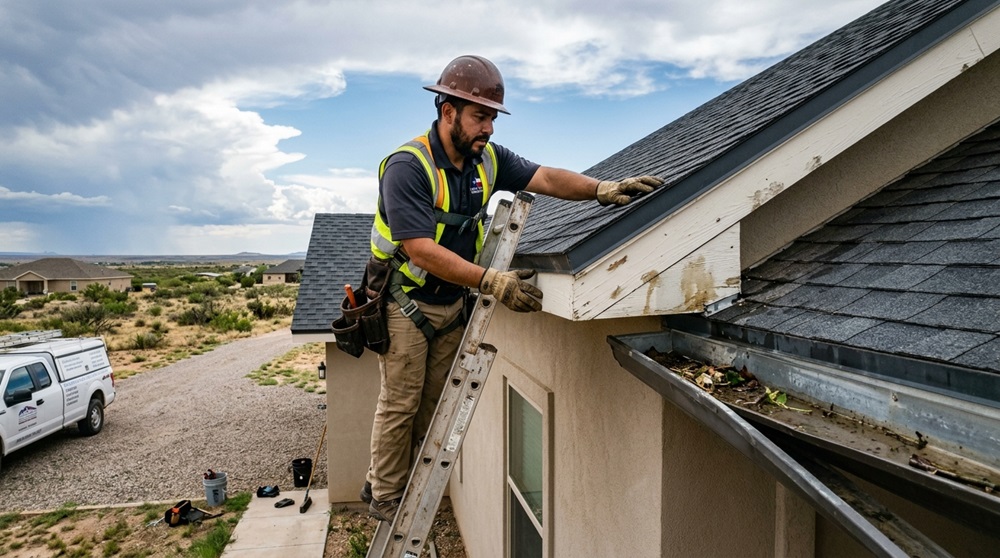
Gutters, soffit, and fascia are often overlooked until damage becomes obvious. These components help manage water, support roof-edge appearance, and protect vulnerable areas.
Gutters
Gutters move water away from the roofline and foundation. Dented, clogged, or loose gutters may cause water to spill over, damage fascia, or collect near the property.
Soffit
Soffit protects the underside of roof overhangs and may support ventilation. Damaged soffit can allow moisture, pests, or airflow issues.
Fascia
Fascia sits along the roof edge and supports gutters. Damaged fascia can create problems with drainage, roof edges, and exterior appearance.
When a roof is inspected after a storm, these areas should be reviewed as well.
Ask About Replacement Windows
Windows are part of the exterior protection system. Damaged or aging windows may affect comfort, energy performance, moisture protection, and curb appeal.
Property owners may consider replacement windows when they notice:
- Drafts
- Broken seals
- Fogging between panes
- Water intrusion
- Warped frames
- Hail or wind damage
- Difficulty opening or closing
- Rising comfort concerns
- Damaged exterior trim
Window performance can also affect energy use and indoor comfort. The U.S. Department of Energy’s energy efficient windows guidance explains that window selection, installation, and condition can affect heat gain, heat loss, and home performance.
Check Experience With Carports and Metal Structures
Many West Texas properties need more than standard home exterior work. Carports, shops, agricultural structures, metal buildings, and barndominiums are common in the region. These structures may require contractors who understand metal panels, framing, rooflines, drainage, and wind exposure.
A contractor may be useful for:
- Residential carports
- Commercial carports
- Metal building roof repairs
- Barndominium roofing
- Shop roofing
- Metal siding
- Wind-related panel damage
- Fastener and seam issues
- Custom exterior planning
This experience matters when a property includes multiple structures or when the exterior project involves both roofing and metal construction.
Compare Material Recommendations Carefully
A contractor should explain material choices clearly. The cheapest option is not always the best long-term choice, but the most expensive option is not automatically necessary either.
Material recommendations should consider:
- Weather exposure
- Roof slope
- Building type
- Budget
- Appearance goals
- Heat performance
- Wind and hail risk
- Maintenance expectations
- Warranty options
- Long-term durability
For hot climates, the U.S. Department of Energy’s cool roofs energy guidance explains how reflective roofing materials can absorb less solar energy and help reduce roof surface temperatures. This can be useful context when comparing roof materials in West Texas.
Ask About Communication and Project Management
A strong contractor should communicate clearly before, during, and after the project. Property owners should know who to contact, what the timeline is, and what to expect during the work.
Good communication includes:
- Clear inspection findings
- Written estimate
- Project timeline
- Material explanation
- Weather delay updates
- Cleanup expectations
- Warranty information
- Follow-up contact
- Honest answers to questions
Poor communication can turn even a simple project into a stressful experience. Before hiring, pay attention to how clearly the contractor explains the work.
Watch Out for Red Flags
Property owners should be cautious when a contractor creates pressure or avoids documentation.
Red flags may include:
- Pressure to sign immediately
- No written estimate
- No proof of insurance
- Vague warranty promises
- Unclear materials
- No local service information
- Large upfront payment demands
- Poor communication
- Refusal to explain repair versus replacement
- No clear cleanup plan
- Promises about insurance approval
A trustworthy contractor should provide information, answer questions, and give the property owner time to make a reasonable decision.
Practical Contractor Selection Checklist
Use this checklist before hiring a roofing and exterior contractor in West Texas:
- Confirm local West Texas service experience.
- Ask what roofing and exterior services are offered.
- Request proof of insurance.
- Ask for a written inspection summary.
- Get a clear written estimate.
- Review repair and replacement options.
- Ask about roofing, siding, gutters, windows, and carports if needed.
- Ask whether they handle metal buildings and barndominiums.
- Review storm damage documentation.
- Compare material recommendations.
- Confirm warranty information.
- Ask who supervises the project.
- Review cleanup expectations.
- Avoid high-pressure sales tactics.
- Save estimates, receipts, photos, and project notes.
FAQ
What should I look for in a roofing and exterior contractor in West Texas?
Look for local experience, insurance, clear written estimates, strong communication, roofing and exterior service knowledge, storm damage documentation, and experience with the type of property you own.
Why should roofing and exterior services be considered together?
Roofs, gutters, siding, soffit, fascia, windows, and exterior trim work together to protect the property. Storm damage or drainage problems can affect several areas at the same time.
Should I choose a contractor who handles both roofing and siding?
It can be helpful, especially after storms. A contractor who understands both roofing and siding can inspect the property more completely and identify damage that may affect multiple exterior systems.
What exterior damage should I check after hail or wind?
Check for missing shingles, dented gutters, damaged vents, cracked siding, loose fascia, broken window trim, damaged soffit, and leaks after rain. Always inspect from a safe location.
Is roof repair better than roof replacement?
Roof repair may be better when damage is limited and the roof is still in good condition. Replacement may be better when the roof is old, widely damaged, repeatedly leaking, or near the end of its service life.
Can one contractor handle homes, commercial buildings, carports, and metal buildings?
Yes, some contractors handle residential roofing, commercial roofing, exterior services, carports, metal buildings, and barndominiums. This can be useful for West Texas property owners with multiple building types.
Final Thoughts
Choosing the right contractor for roofing and exterior services in West Texas should start with local experience, clear documentation, practical recommendations, and a full understanding of how the property’s exterior systems work together.
A roof problem may connect to gutters, fascia, siding, windows, or metal building components. Storm damage may affect several exterior areas at once. That is why property owners should choose a contractor who can inspect the full exterior, explain repair or replacement options, and recommend materials suited for West Texas conditions.
For homeowners, business owners, and rural property owners comparing exterior project options, reliable roofing services West Texas can help protect the structure, improve durability, and make the repair or replacement process easier to understand.
